On Wednesday, October 21, 2026 the House Blue-Ribbon Study Committee on Local Government Taxation, Funding, and Budgeting met for their fourth hearing in Perry, Georgia. The Agenda, similar to their first three meetings, included speakers primarily focused on benefiting government. Today's agenda listed 19 potential speakers - 12 from government, 3 non-profit business or foundation, 3 for-profit business, and me (self-appointed representative of the citizens). The meeting was scheduled for four hours, 9:00 am until 1:00 pm, after 3:20 minutes of government testimony, I hurridly presented the following without the opportunity for questions.
Showing posts with label brett harrell. Show all posts
Showing posts with label brett harrell. Show all posts
Friday, October 23, 2026
Wednesday, May 11, 2022
Reason: GA Lawmakers Introduce Bill to End Death Penalty
Georgia Lawmakers Have Introduced a Bill to End the Death Penalty
The bill was introduced by Republicans and co-sponsored by Democrats.

Last week, Georgia state representatives introduced a bill aimed at ending the death penalty.
Three Republicans, Brett Harrell (Snellville), Bill Werkheiser (Glennville), and Scot Turner (Holly Springs), introduced HB207, with three Democrats, Robert Trammell (Luthersville), Scott Holcomb (Atlanta), and William Boddie (East Point), cosponsoring. HB207 seeks to "amend the Official Code of Georgia Annotated so as to repeal the imposition of the death penalty." The proposed bill also seeks to remove any reference to capital punishment from state law as well override any laws in conflict with the new legislation.
The bill reflects a growing trend in the state's criminal justice system. The Atlanta Journal-Constitution reports that prosecutors rarely seek the death penalty in the state as a growing number of juries are rejecting it. A person can only be sentenced to death by a unanimous decision. Anything less will result in a life sentence.
Despite the newer attitudes towards capital punishment, the Atlanta Journal-Constitution notes that Georgia has also produced landmark Supreme Court cases regarding the practice. This includes Gregg v. Georgia, a 1976 decision which held that the death penalty was not an outright violation of the Eighth Amendment's prohibition on "cruel and unusual punishments."
Harrell, who is very open about his opposition to the death penalty, retweeted his stance that there was "absolutely nothing conservative about the death penalty."
Hannah Cox, the national manager of the group Conservatives Concerned About the Death Penalty, shared similar beliefs in an interview with Reason. "As conservatives try to live up to their principles, which are limited government, fiscal responsibility, and protecting the sanctity of human life," she says, "this is such an obvious area where we are failing and have failed for many years."
Cox adds that the death penalty does not meet "any of those metrics."
As for the bipartisanship of the bill, Cox says criminal justice reform, including the abolition of the death penalty, is an issue "that brings both sides together."
Capital punishment in Georgia recently sustained a new wave of criticism after the Supreme Court declined to hear an appeal by inmate Keith Tharpe. Sentenced to death for the murder of his sister-in-law, Jacqueline Freeman, Tharpe and his lawyers allege that now-deceased juror Barney Gattie chose the death penalty for Tharpe because Gattie was racist. To make their case, lawyers submitted a signed affidavit where Gattie used racial slurs and shared his thoughts on "'good' black folks."
https://reason.com/2019/04/02/ga-death-penalty-bill/
was an assistant editor at Reason.
Monday, April 11, 2022
Disability Rights Groups, Legal Experts, and Conservative Advocates Urge Supreme Court to Strike Down Georgia’s Uniquely Harsh Proof Requirements in Death-Penalty Intellectual Disability Cases
A coalition of disability rights groups, legal experts, and conservative advocates are urging the U.S. Supreme Court to strike down the uniquely harsh burden of proof Georgia has imposed upon defendants seeking to establish their ineligibility for the death penalty because of intellectual disability.
In four friend-of-the-court briefs filed in late December 2021, two former U.S. solicitors general, eight former prosecutors and judges, seven leading disability rights organizations, scholars, and experts in intellectual disability, and a group of conservative legal reform advocates all urged the Court to declare unconstitutional Georgia’s requirement that capital defendants and death-row prisoners prove “beyond a reasonable doubt” that they are intellectually disabled. The filings came in the case of Rodney Young, a Georgia death-row prisoner long classified in school records as “mentally retarded” (the previous name for intellectual disability), who is challenging the requirement.
Under the U.S. Supreme Court’s 2002 ruling in Atkins v. Virginia, the execution of someone with intellectual disability violates the Eighth Amendment ban on cruel and unusual punishment. No other state requires capital defendants to prove intellectual disability beyond a reasonable doubt, and even Georgia does not impose a comparably high burden in assessing the eligibility of intellectually disabled individuals for social services. Since Georgia adopted the standard in 1988, neither Young nor any other defendant tried for intentional murder has ever been able to satisfy it.
Young’s lawyers and the friend-of-the-court briefs argue that Georgia’s law violates both the Court’s ruling in Atkinsand his Fourteenth Amendment right to due process. Noting that the “beyond a reasonable doubt” standard is not imposed on the defendant in any other constitutional rights claim, Young argues that “Georgia is an extreme outlier … not only with respect to Atkins claims, but with respect to all of constitutional law.”
Georgia was the first state to pass a law exempting people with intellectual disability from the death penalty, and the author of the law says the high burden of proof was a drafting error. Jack Martin, one of the legislators responsible for drafting the bill, said in 2013, “I dropped the ball.… It was sloppy draftsmanship, pure and simple.” The bill was not intended to create a “beyond a reasonable doubt” standard but, Martin said, a key clause was put in the wrong place. “I don’t think anybody intended that to happen.”
The Amicus (Friend-of-the-Court) Briefs
In their amicus brief, filed on December 23, 2021, Charles Fried, U.S. Solicitor General under President Ronald Reagan, and Seth Waxman, U.S. Solicitor General under President Bill Clinton, wrote that the outcome of Young’s case has important implications for the rule of law. “Invalidating Georgia’s rule would not only eliminate an extreme and unconstitutional outlier but would also reaffirm several principles vital to the rule of law,” they wrote, “including that lower courts are obligated to follow this Court’s precedents irrespective of whether they think those precedents are correct or might be reconsidered and that procedural rules may not subvert substantive protections.” They point out that the consequence of a wrongful execution “is as grave and irreversible as can be,” while the consequence of imposing the available non-capital sentence — usually a sentence of life without parole — on someone who is almost but not quite ineligible to be sentenced to death “is modest.”
A group of eight former judges and prosecutors, in an amicus brief also filed on December 23, emphasized the historical purpose of the beyond-a-reasonable-doubt standard: “to preserve human life and liberty.” “Georgia’s unprecedented rule jarringly subverts the purposes the beyond-a-reasonable-doubt standard has served throughout its history,” they continue. “Rather than err on the side of protecting individual life and liberty, the Georgia rule errs on the side of death and virtually guarantees the execution of intellectually disabled individuals. Indeed, in the more than thirty years since the rule was created, not one capital defendant has persuaded a jury of his intellectual disability in a case of intentional murder.”
The individual signers of the brief included former Texas Court of Criminal Judge Elsa Alcala, whose reasoning was adopted by the Supreme Court in Moore v. Texas to strike down scientifically unjustifiable limitations on proof of intellectual disability imposed by Texas; former Florida Supreme Court Justice James E.C. Perry, whose reasoning was adopted by the Supreme Court in Hall v. Florida to strike down Florida’s use of a clinically invalid strict IQ cutoff of 70 to limit the individuals who qualified for a determination of intellectual disability; and former Georgia Supreme Court Justice Norman S. Fletcher, who dissented from the state’s pre-Atkins ruling in Jenkins v. State that initially upheld Georgia’s proof-beyond-a-reasonable-doubt requirement.
A third amicus brief, filed on December 27, 2021 by a group of disability rights organizations and experts, including the Disability Rights Legal Center and the National Disability Rights Network, described both the risk of jurors relying on unscientific assessments of intellectual disability and the disparity between Georgia’s burden of proof and the treatment of intellectual disability in other aspects of law. On the issue of juror understanding of intellectual disability, the brief explains, that Georgia judges “instruct[ ] jurors that a reasonable doubt ‘is a doubt based upon common sense and reason,’ [which] all but invites jurors to rely on lay perceptions of intellectual disability and lay stereotypes” such as those the Court already struck down in Moore to reject a defendant’s meritorious intellectual disability claim.
“Georgia allows jurors to find reasonable doubt by relying on one or more stereotypes about intellectual disability or on seemingly inconsistent diagnostic evidence, even though, under accepted clinical standards, such evidence could well support a diagnosis of intellectual disability,” the rights advocates wrote. Their brief also contrasts Georgia’s treatment of intellectual disability in death-penalty cases with its treatment in other situations. “Georgia does not require that intellectual disability be proven beyond a reasonable doubt in areas ranging from providing services for people with intellectual disability to determining limitations periods for medical-malpractice suits,” the experts say. “Only here—when a person’s life is at stake—has Georgia chosen to place ‘almost the entire risk of error’ on the person in need of the law’s protection.”
The fourth brief, filed by the Rutherford Institute, a conservative non-profit legal services organization dedicated to civil liberties and human rights, Conservatives Concerned About the Death Penalty, and Brett Harrell, a former Republican state legislator representing Georgia Conservatives Concerned About the Death Penalty, highlights the government overreach inherent in the Georgia law. Burdens of proof, they write, is one way “our legal system protects individual rights and liberties” and “serve to allocate the risk of error between the parties involved, … reflect[ing] a societal judgement about which party should bear that risk.” In criminal cases, they write, “the government typically bears the risk of error.”
In a capital case, their brief argues, “a wrongful execution is irreversible.” In such cases, risk of error “cannot be placed on the individual asserting his constitutional right not to be executed.” Without any compelling reason, and alone among the states, they conservative advocates write, “Georgia has departed from this allocation of risk. … This Court should welcome the opportunity to correct Georgia’s deeply consequential overreach.”
https://deathpenaltyinfo.org/news/disability-rights-groups-legal-experts-and-conservative-advocates-urge-supreme-court-to-strike-down-georgias-uniquely-harsh-proof-requirements-in-death-penalty-intellectual-disability-cases
Monday, March 7, 2022
Brett Harrell news archives
News archives for Brett Harrell, former mayor and state Representative in Georgia.
40 Under 40 Influential Georgians (Georgia Trend, October 1, 2000)
In support of Secretary Brad Raffensperger (Politico, February 24, 2022)
Over-taxing affordable housing (AJC, December 16, 2021)
 |
| Representative Brett Harrell |
Monday, February 14, 2022
Brett Harrell in the News - Georgia Recorder
Article archive from the Georgia Recorder:
Repeal of Georgia's Death Penalty authored by Rep. Brett Harrell
Reasonable Taxation of Vape Products and No Cigarette Tax Increase - Brett Harrell
House Passes Income Tax Cut without putting services at risk authored by Rep. Brett Harrell
House advances Income Tax Cut proposal - the sky won't fall during the pandemic - Brett Harrell
Marketplace Facilitator Bill provides funding to Cut Taxes AND Increase Teacher Pay - Brett Harrell
Gaming in Georgia - It's time to Let the People Vote - Committee Co-Chair, Brett Harrell
 |
| Ways & Means Chair Brett Harrell with future Chair Shaw Blackmon |
Wednesday, February 2, 2022
Brett Harrell photo blog
 |
| Brett-Harrell with Rules Chair John Meadows |
 |
| Brett-Harrell, Governor Kemp, Chairman Chuck Huffstetler, Senate Finance |
 |
| Majority Leader Jon Burns and Rep Brett Harrell |
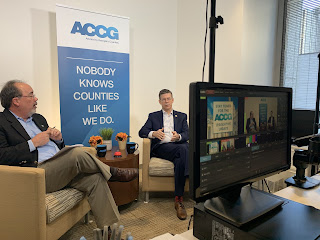 |
| ACCG's Todd Edwards interviews Ways and Means Chairman Brett Harrell |
 |
| Ways and Means Chair Jay Powell with Brett Harrell |
 |
| Governor Deal bill signing (Harrell, Brett) |
 |
| Rep Brett Harrell meet with the Georgia Food Industry |
 |
| Governor Deal with Senator P.K. Martin and Rep Brett Harrell on the occasion of the Atlanta United Resolution passage. |
Saturday, September 26, 2015
Tax Policy and Tax Reform in Georgia
The Ways and Means Committee is the chief tax writing committee in the General Assembly and derives its' importance from the state Constitution that provides all revenue bills must originate in the House. The committee considers not only taxes (income, sales, ad valorem, excise, motor fuel, estate, and others), but exemptions and credits as well. I currently serve as Secretary to the full Committee and Chair of the Ad Valorem Tax Subcommittee.
Representative Jay Powell is Chairman of the Ways and Means Committee and he has charged members with considering appropriate tax policy to apply to tax reform efforts in Georgia. I shared with Chairman Powell the following thoughts on the direction I would like to see tax policy and tax reform move in Georgia.:
Representative Jay Powell is Chairman of the Ways and Means Committee and he has charged members with considering appropriate tax policy to apply to tax reform efforts in Georgia. I shared with Chairman Powell the following thoughts on the direction I would like to see tax policy and tax reform move in Georgia.:
- No rate increase on any non-excise tax revenue source
- No increase in the sales tax rate
- Reduce personal income tax rates
- Eliminate corporate income taxes
- No tax on business inputs
- Broaden the sales tax base
- Provides opportunities for increased revenue at current rates
- Reduce the number of income tax brackets
- Adjust 'sin' taxes to the average of all states or the average of border states
- Would result in a reduction in some tax rates and an increase in others ultimately resulting in a neutral tax policy for Georgia as compared to other states with regard to 'sin' taxes.
- No fees on property tax bills
- Generates an estimated $6 - $8 million in revenue to the state and acts as a 'governor' on local governments raising taxes and fees.
- No new local sales taxes and/or increases in existing caps
- Eliminate certain credits / exemptions - based on return on investment analysis; will result in revenue
- Sunset all credits / exemptions - likely will result in revenue over time
- New credits by refund ONLY once documented achieving goals - likely to result in revenue over time
- Policy should benefit maximum number of taxpayers possible
- Policy does NOT incentivize government assistance
- Policy does NOT drive market behavior and/or create new private sector profit opportunities
- i.e.: marketable tax credits
- Recognize our bond rating is the result of sound fiscal policy and should not dictate policy
Obviously, there are many more considerations and the devil is in the details of any piece of legislation, however, these are the broad concepts I believe would serve Georgians well with regard to our tax policy and tax reform.
I welcome your comments.
Sunday, March 29, 2015
2015 Capitol Update Week 11 - Two days remain
Two days remain in the 2015 Session
Tuesday and Thursday this week are the final voting days of the 2015 Session of the Georgia General Assembly. Before mentioning what remains, please find a brief update on several items voted this past week.
On the way to the Governor these bills received final passage:
SR 287 and SB 133 proposed by Governor Nathan Deal provide via voter referendum a Constitutional Amendment to create an Opportunity School District to address chronically failing schools. I voted YES and in November 2016 you will have the opportunity to vote on this measure as well.
On Thursday the House and Senate Insurance Committees reached an agreement to provide Autism coverage for children age 6 and under. (Has not received final passage yet, however, should be on the way to the Governor next week.)
HB 1 passed the Senate and Governor Deal signed the bill into law on Friday beginning the process of providing medical cannabis oil for treatment of several debilitating conditions including cancer, multiple sclerosis, seizure disorders, amyotrophic lateral sclerosis (ALS), Crohn’s disease, Parkinson’s disease, mitochondrial disease, and sickle cell disease.
HB 57 the Solar Power Free Market Financing Act making it easier and more affordable for homeowners to generate solar power for their homes.
SB 63 the Beer Jobs Bill permits visitors to breweries and distilleries to leave with ‘souvenirs’ that may include up to 72 oz of beer or 750 ml of spirits. Brewpubs may choose to offer cans and bottles as well.
Remaining issues that may or may not make it to the finish line this year:
SB 129 the Georgia Religious Freedom Restoration Act will be heard again Monday at 10 a.m. in the House Judiciary Committee.
HB 535 the Brunch Bill providing local governments the ability to expand Sunday sales hours for restaurants, brewpubs, and hotels.
Hey Dad, look who I met this week!
 |
| Former Atlanta Falcon greats Tommy Nobis (Mr. Falcon) and Jeff Van Note. |
.
As always, I remain appreciative that you allow me to serve as your state Representative. I encourage you to contact me with any comments or questions you have about the legislation being considered at the state Capitol. You can reach me at my Capitol office at 404-656-0254 or on my cell at 404-966-5804 or via email at brett.harrell@house.ga.gov.Thank you,

Brett Harrell
Monday, March 16, 2015
2015 Capitol Update Week 9 - Ten Yeas and Ten Nays
Ten Yeas and Ten Nays to recap Week 9 - Crossover Week
What a week! By my colleague Rep. Buzz Brockway's count, the House considered 119 bills last week including 57 on Friday - Crossover Day. I will briefly mention twenty - ten I voted in favor and ten I voted against on the House floor. Should you have a question about a particular bill and/or my vote, whether mentioned here or not, please send me an email at Brett@VoteHarrell.com or give me a ring on my cell at 404-966-5804.
Before I mention the bills, the best part of the week was a visit to the Capitol by my parents.
 |
| Bobby, Vivian, and Brett Harrell |
Yea! I voted YES on these bills:
HB 17 the Hidden Predator Act provides expanded ability for those suffering from sex abuse to confront their perpetrator. Passed 169 - 2.
HB 110 would expand the sale of fireworks in Georgia to include a significantly larger number of products. Passed 119 - 49.
HB 152 by Rep Geoff Duncan narrowly targets high alcohol service establishments by restricting employment and/or entry to those 21 or older. I sincerely appreciate Rep Duncan allowing me to participate in drafting a revised bill limiting unintended consequences and targeting just those that are most likely to serve underage patrons. Passed 157 - 12.
HB 209 provides additional information and notification to parents regarding Georgia's Special Needs Scholarships. Passed 168 - 4. Congrats to my seatmate, freshman Rep Wes Cantrell, on passage of his first bill.
HB 221 that I authored provides that tax assessors must consider rent limitations when valuing properties financed through low interest loan programs and targeting low-to-moderate income individuals. Passed 169 - 0.
HB 225 the Uber bill is a compromise supported by all parties - Uber, Lyft, Taxis, and Limos on insurance, taxation, background checks and more. Passed 160 - 10.
HB 268 provides for mandatory reporting of suspected child abuse by medical, school, and law enforcement personnel. Passed 172 - 0.
HB 393 the Tesla bill is a compromise supported by all parties - Georgia's auto dealers and manufacturers to permit expanded sales within Georgia by the Tesla auto company. Passed 170 - 3.
HB 470 the Pharmacy Audit Bill of Rights provides protection for your local, independent pharmacy too often forced to sell below cost by nationwide pharmacy benefit management firms that set pricing and reimbursement rates. Passed 168 - 0.
HB 535 the Brunch Bill that I authored allows cities and counties that have already authorized Sunday sales at restaurants to extend serving hours to as early as 10:30 a.m. Nearly 4,000 Georgia restaurants sell beginning at 12:30 p.m. on Sunday today. The additional two hours may generate nearly $100 million in additional taxable sales. Passed 121 - 47.
Nay! I voted NO on these bills:
HB 3 the Todd Gurley bill establishes penalties for private individuals that seek to profit from adults that know the rules. I voted NO, the bill passed 145 - 27.
HB 131 establishes an overly broad definition of Cyberbullying that will be difficult to enforce and I fear result in no measurable decrease in bullying activity. I voted NO, the bill passed 140 - 26.
HB 154 proposed to increase contempt fines in local Magistrate Courts from $200 to $500. I voted NO and the bill failed 76 - 90.
HB 238 provides a $750,000 sales tax refund for a construction project at the Georgia Aquarium. As introduced, the refund was unlimited; arguing against the measure in the Ways & Means Committee the cap of $750,000 became the compromise. I still voted NO on the floor, the bill passed 142 - 28.
HB 279 provides substantial raises for Judges. Gwinnett County does not qualify as local judges exceed the threshold established in the bill for additional compensation. That said, the raises are excessive not only in dollar amounts, but in putting Georgia among the highest paid in the nation for a number of positions. Just emerging from a recession with pay lagging for many is not the time to raise compensation for those well above the average household income. I voted NO, the bill passed 142 - 21.
HB 308 provides a $5 million income tax credit to a single hotel project in Savannah and up to $25 million income tax credits for historic rehabilitation projects across the state. As a member of the Ways & Means Committee, I worked to reduce the credit from the original $25 million requested for the hotel project and $60 million statewide to the lower values. I still voted NO on the floor as I believe the project is viable without the tax credits, the bill passed 147 - 22.
HB 338 establishing an additional tack-on fee to traffic citations to fund technology improvements for local law enforcement that would reduce costs. I have fought this measure for four years and the House soundly defeated it by a vote of 39 - 127.
HB 428 provides a $350,000 sales tax refund to the Atlanta Zoo for an expansion project. I worked in the Ways & Means Committee to place the cap on the refund, as the bill originally introduced was unlimited. I still voted NO on the floor as I believe the project is viable without the tax credits, the bill passed 147 - 22.
HB 439 established the New Market Tax Credit program in Georgia modeled after a Federal program that may provide up to $120 million in funds via the Insurance Premium Tax for projects targeting primarily rural Georgia. I voted NO. If our Insurance Premium Tax is generating that much surplus to invest elsewhere, we ought to cut the tax rather than incentivize private development. The bill passed 151 - 18.
HB 510 establishes the Georgia Sports Commission Fund creating a new Board and new revenues to invest in attracting sporting events to Georgia. Hey, I love sports too, but how does the proper role of government include sports? I voted NO, the bill passed 147 - 21. Expect a new board and more of your money going to wealthy sporting programs soon.
As always, I remain appreciative that you allow me to serve as your state Representative. I encourage you to contact me with any comments or questions you have about the legislation being considered at the state Capitol. You can reach me at my Capitol office at 404-656-0254 or on my cell at 404-966-5804 or via email at brett.harrell@house.ga.gov.
Thank you,

Brett Harrell
Sunday, March 8, 2015
2015 Capitol Update Week 8 - Transportation and Brunch
HB 170 the Transportation Funding Act
The floor vote on HB 170 occurred on Thursday and involved four separate votes - I voted YES on each measure.
After Transportation Chairman Jay Roberts presented HB 170, Majority Leader Larry O'Neal offered an amendment to reduce the state excise tax rate from 29.2 cents to 24 cents per gallon. I voted YES to the reduction; however, the motion failed 77 - 94.
Representative Ed Setzler then offered an amendment to require a referendum of voters within any county that intended to construct any new fixed guide-way transit system (i.e. - rail line). I voted YES to require a referendum; however, the motion failed 84 - 87.
After both floor amendments failed, Majority Whip Matt Ramsey motioned to table HB 170. I voted YES to table the bill; however, the motion failed 56 - 111.
On House passage of HB 170, the Transportation Funding Act I voted YES.
Reasoning in support of my YES vote on HB 170
HB 170 included numerous policy positions I advocated for; therefore, I supported keeping the bill 'alive' by sending it to the Senate. This most certainly was not our last vote on the issue - I reserve my right to vote 'No' on the final bill.
What does HB 170 include that I believe is the right course for Georgia's future?
- Georgia will no longer 'divert' funds collected on motor fuel to other spending. By converting to a state excise tax, the state will spend all motor fuel taxes on transportation.
- Georgia began shifting debt service from the Department of Transportation budget to the General Fund budget under the FY 2016 budget when issuing $210 million in transportation bonds.
- Ways & Means advanced and HB 170 included elimination of the $45 million electric vehicle tax credit as well as the $25 million jet fuel sales tax exemption.
- Alternative fuel vehicles that paid little or nothing toward road maintenance incur an annual $200 fee under HB 170.
- Converting to an excise tax on motor fuel allows Georgia to participate in the International Fuel Tax Agreement that may generate up to $60 million in new revenue by removing an incentive for our trucking industry to make fuel purchases outside the state.
On that note, the House is considering two income tax reduction measures - HB 435 and HB 445 .
Income Tax Cuts - HB 435 and HB 445
Representative B. J. Pak of Lilburn and I introduced HB 435 this week that wouldreduce the top state income tax bracket from 6% to 5.25% by eliminating all itemized deductions save charitable contributions and mortgage interest up to $20,000 per year.
Representative John Carson of Marietta introduced HB 445 that would reduce the top state income tax rate further to 4% by increasing the statewide sales tax to 5% and imposing that tax on a greater number of goods and services including food.
I do not anticipate either bill will become law this year, however, I believe it is well past time the General Assembly begins the discussion on reducing income taxes for all Georgians.
My letter of January 23, 2015 advocating for increased transportation funding and state income tax cuts.
On a lighter note - HB 535 the Brunch Bill
My week ended with the Regulated Industries Committee unanimously passing HB 535the Brunch Bill that permits local governments, already allowing Sunday alcohol sales, to expand the serving hours to 10:30 a.m. The Georgia Restaurant Association anticipates nearly 4,000 of the 17,000 restaurants in Georgia would benefit from passage of this legislation.
If there is a bill or issue that is important to you or your family, send me a quick email at Brett@VoteHarrell.com and let me know your opinion.
Committee calendars
House committee meeting calendar:
Senate committee meeting calendar:
As always, I remain appreciative that you allow me to serve as your state Representative. I encourage you to contact me with any comments or questions you have about the legislation being considered at the state Capitol. You can reach me at my Capitol office at 404-656-0254 or on my cell at 404-966-5804 or via email at brett.harrell@house.ga.gov.
Thanks for allowing me to serve,
Brett
Friday, February 27, 2015
2015 Capitol Update Week 7 - Budget, Cannabis, Transportation
A busy two weeks
The Georgia General Assembly passed the half way mark for the 2015 Session this week. Crossover day, the 30th day of the Session and the last day a bill must pass one chamber for consideration by the other, is Friday, March 13. Sine Die, our last day of the Session, is April 2.
The House passed two pieces of legislation frequently making the news - the Fiscal Year 2016 Budget (HB 76) and Medical Cannabis Oil (HB 1). I voted YES on both pieces of legislation.
FY 2016 Budget at $21.7 Billion
The budget effective July 1, 2015 reflects an increase of $946 million, or 4.5%, over the prior year. K-12 education receives 60% of all new spending, over $570 million. The House budget also maintains State Health Benefit Plan coverage for non-certified school employees while transitioning the cost to the local school systems as these individuals are not state employees. Higher education received approximately 12% of the increase.
The House increased investment in transportation as well with an infusion of both $55 million in cash and $210 million in bonds. In fact, 20% of the entire bond package funds transportation improvements including $100 million to repair replace and renovate bridges and another $100 million allocated to statewide transit systems. Finally, $10 million in bonds will pay for rail rehabilitation, seawall construction and dike improvements along the Savannah River.
Including agency transfers, special funds, and federal funds, the total state budget exceeds $40 billion.
 |
| My seatmates listening to budget presentation. L to R: Margaret Kaiser, Wes Cantrell, me, and Tom Rice. |
HB 170 the Transportation Funding Act
House Transportation Chairman Jay Roberts continues to work with all interested parties to modify the proposal to provide significant resources to our state's transportation infrastructure. Next week, the House Transportation Committee will again consider the bill - I welcome your input as a member of the committee and your state Representative - email me your thoughts Brett@VoteHarrell.com
Is HB 170 a tax increase? Yes and transportation is a core government function rightly funded via taxation. That said, as one that has demonstrated time and again to be a low tax advocate, I am, thus far, supportive of the initiative as it includes several policy positions I believe beneficial for our state's future.
On January 23, 2015, prior to introduction of HB 170, I wrote advocating for the following policy positions reflected in both HB 170 and the FY 2016 budget:
- Redirecting the fourth percentage of sales tax on motor fuels to GDOT
- Systematically removing debt service from GDOT departmental budget
- Eliminating the electric vehicle tax credit and redirecting to transportation
- Allocating a portion of revenue growth to transportation
While reserving the discretion to cast your vote in opposition, I recognize that whatever form HB 170 might pass the House will not be the final form once reviewed by the Senate. I believe we should continue the process to reach an agreeable means to increase transportation funding.
Income Tax Cuts - HB 435 and HB 445
Representative B. J. Pak of Lilburn and I introduced HB 435 this week that wouldreduce the top state income tax bracket from 6% to 5.25% by eliminating all itemized deductions save charitable contributions and mortgage interest up to $20,000 per year.
Representative John Carson of Marietta introduced HB 445 that would reduce the top state income tax rate further to 4% by increasing the statewide sales tax to 5% and imposing that tax on a greater number of goods and services including food.
I do not anticipate either bill will become law this year, however, I believe it is well past time the General Assembly begins the discussion on reducing income taxes for all Georgians.
My letter of January 23, 2015 advocating for increased transportation funding and state income tax cuts.
Next week
I have authored four bills that have passed the House and are now pending before Senate committees: HB 49, HB 85, HB 206, and HB 261.
If there is a bill or issue that is important to you or your family, send me a quick
email at Brett@VoteHarrell.com and let me know your opinion.
email at Brett@VoteHarrell.com and let me know your opinion.
Committee calendars
House committee meeting calendar:
Senate committee meeting calendar:
As always, I remain appreciative that you allow me to serve as your state Representative. I encourage you to contact me with any comments or questions you have about the legislation being considered at the state Capitol. You can reach me at my Capitol office at 404-656-0254 or on my cell at 404-966-5804 or via email at brett.harrell@house.ga.gov.
Thank you,

Brett Harrell
Subscribe to:
Posts (Atom)
